
FRP reinforcements are designed to replace steel in concrete, with the advantage of being CE-certified (ETA) for structural use in Europe. Their properties—high strength, corrosion resistance, light weight, and magnetic neutrality—make them particularly suitable for several types of structures:
Bridges and viaducts exposed to aggressive environments:
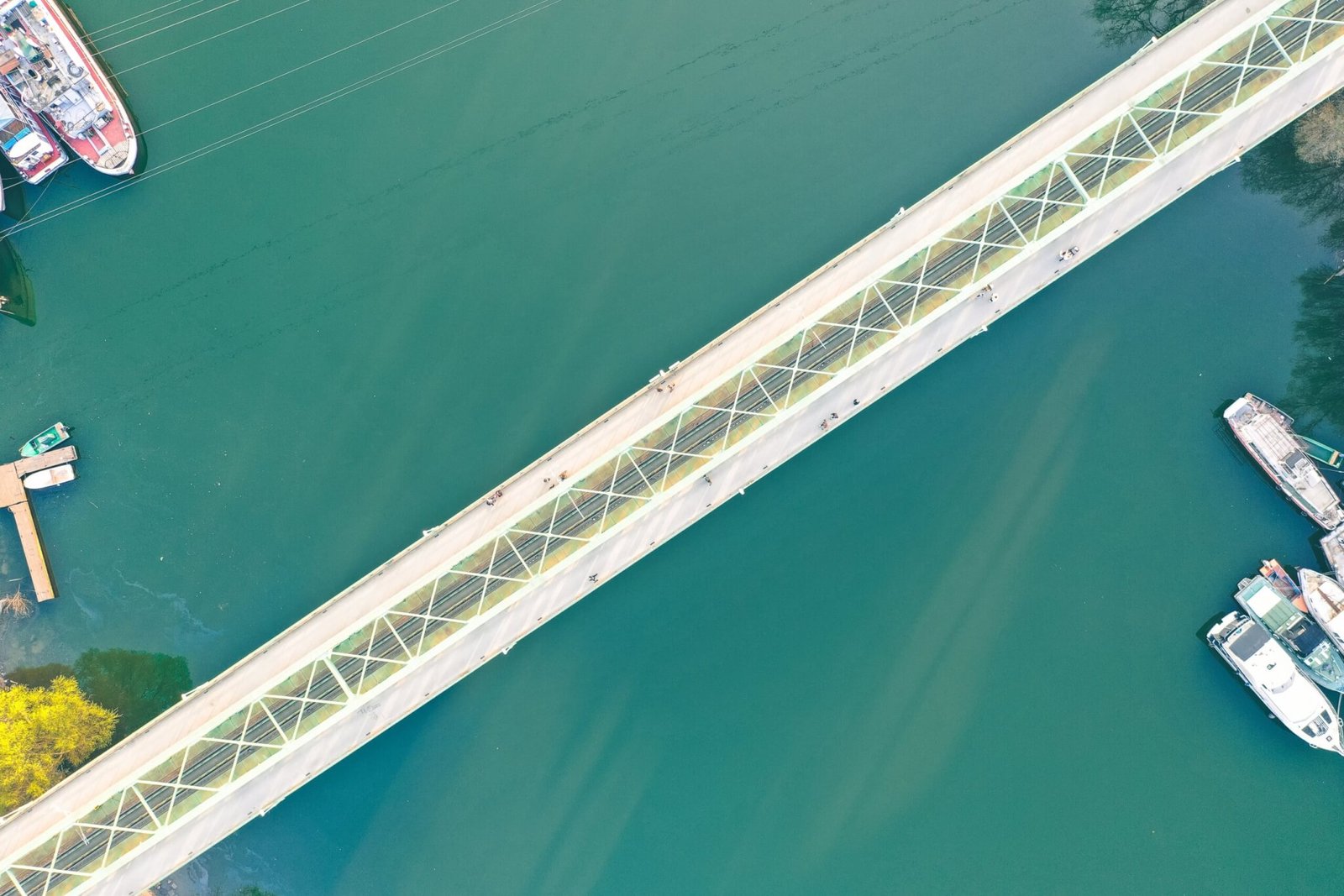
On road bridges, the most vulnerable parts are deck slabs, cornices, sidewalks, and barriers, which are constantly exposed to de-icing salts in winter. Steel often corrodes in these areas, requiring costly repairs every 20–30 years [1]. Replacing steel with FRP reinforcements eliminates the problem at its source: no more corrosion, no more rust-induced cracks. Studies show that a deck reinforced with FRP can expect over 75 years of service without major maintenance [1]. Moreover, the lightweight nature of FRP bars (four times lighter than steel) facilitates prefabrication of bridge slabs in factories and their installation on site, reducing lifting requirements. In coastal areas, the entire structure can benefit from FRP: for example, a small rural bridge crossing a saline zone can be entirely reinforced with FRP, ensuring a fully corrosion-free structure [2]. Despite higher initial costs, this all-composite strategy is considered optimal over the bridge’s life cycle. North American project owners have standardized this practice for new bridges in aggressive environments, and European managers now have a certified solution to significantly improve the durability of their civil engineering works.
Tunnels and underground structures:
FRP is especially useful for creating “sacrificial reinforcement” zones where a tunnel boring machine (TBM) must penetrate a concrete wall (so-called soft-eyes). Over 200 soft-eyes have already been successfully completed worldwide using FRP reinforcements [3]. The advantage is significant: the TBM passes through the FRP-reinforced wall without stopping, whereas with steel it would need manual cutting. In metro or highway tunnel projects, this saves time and enhances safety. FRP is ideal for this purpose: easy to cut with the TBM disc, no risk of damaging machine components with falling steel, and strong enough to withstand soil pressure until the TBM arrives. Beyond soft-eyes, FRP can be used in tunnel bases or buried structures exposed to stray currents (near overhead lines, high-voltage cables). For example, in some underground stations, replacing waiting steel reinforcements with FRP prevents conductive loops and protects against electrolytic corrosion. In short, wherever reinforced concrete interacts with electrical equipment or drilling machinery, FRP reinforcements provide a safe solution by eliminating negative interactions with metal.
Marine environments, wastewater treatment plants, and chemical environments:
This has long been a traditional niche for FRP. Being immune to corrosion, FRP naturally applies to structures in contact with seawater, wastewater, or aggressive chemicals. Concrete elements of ports and quays can be reinforced with FRP, ensuring a lifespan far exceeding traditional structures (often limited to 20–30 years before repairs). Locks, dikes, and river works also benefit from this protection: no steel corrodes over tidal cycles. In wastewater or industrial effluent tanks, water is often acidic or chlorinated, rapidly attacking galvanized steel. FRP guarantees the longevity of structures in highly corrosive environments and avoids metallic contamination of treated water. Coastal foundations are another example: a building whose foundations are regularly exposed to saline groundwater benefits from FRP reinforcements, preventing chloride penetration into the concrete (sacrificial anode effect). Using FRP in foundation footings or piles prevents long-term damage without affecting initial structural performance. An additional environmental benefit is that a steel-free port structure avoids rust particles contaminating the aquatic environment, resulting in a cleaner infrastructure [4]. In conclusion, FRP is ideal for “corrosion-challenging” structures, where its reliability far exceeds that of galvanized or stainless steel (which can still experience pitting or stress corrosion where FRP does not react at all).
In summary, FRP reinforcements open new possibilities for durable construction. Whether extending bridge service life, simplifying tunnel penetrations, or building safely in aggressive environments, their use provides tangible added value. It is essential, however, to follow the specific design guidelines for FRP (available via ETA and AFGC/ACI guides) to maximize the benefits of these innovative reinforcements safely.